Use one picture and one action
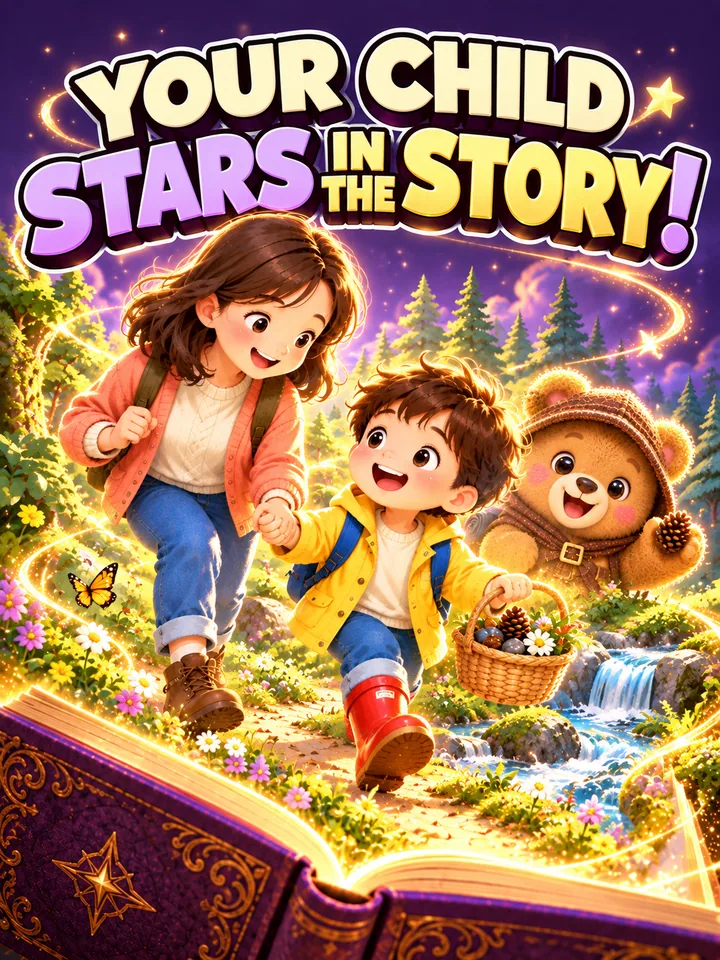
“乐乐穿着红色雨靴,和妈妈去森林寻宝。” identifies a character, clothing, a companion and an action. Looking for those details in the illustration gives a parent concrete things to discuss.
This is a suggested reading routine, not a measured learning-outcome claim. If a generated picture differs from the text, address that difference instead of teaching it as fact.
Hear the Chinese and its English counterpart
The English sentence is: “Lele put on his red rain boots and went treasure hunting in the forest with Mama.” Both recordings correspond to the same sentence in the same finished book.
Play a complete sentence before repeating a useful part. A parent who is less fluent in Chinese can first establish the situation in English, then return to the Chinese characters and action.
Explore one word or idea
You might discuss when rain boots are useful, then return to why Lele is getting ready to leave. These are editorial reading suggestions, not lines spoken by the model in the demonstration.
Supported interactive words in the app can lead to relevant cards. This does not mean every interface label is tappable or every word has every kind of expanded material.
A reading task: find the three treasures
This editorial reading task uses sentences 4 and 5 from later in the same book. It is not a second app generation or a new model response. Read the two lines, name the three objects they find, then check against the text.
他们在大树下找到了一片红红的叶子,又捡到一个圆圆的松果。
Under the big tree, they found a red leaf and picked up a round pinecone.
乐乐还发现了一块亮亮的小石头,像一颗小星星。
Lele also found a shiny little stone, like a little star.
Which three objects do they find? What do red and round describe?
Answer key: A leaf, a pinecone and a small stone. Red describes the leaf; round describes the pinecone.
This answer key is an editorial reading aid based on the text, not an app-generated assessment.
Locate a word in the story, then check its card
The demonstration opens a rain-boots word card. After hearing the opening, locate the clothing in the text and check whether the relevant card’s picture and meaning identify the same kind of object. These are checking steps; this page does not invent card content that the recording did not show.
- In the sentence: find 雨靴 and explain how the clothing relates to setting off.
- In the card: compare the word, picture and sound; pause if they disagree.
- For another word: the linked forest entry belongs to the separate public web dictionary, not this app’s account or saved items.
Check both the example and the access conditions
The video combines editorial explanation and actual book narration. It lets you assess the text, sound and pacing; it does not replace current access, device or eligibility information.
Story, illustration and audio options may carry different usage costs. Check generated content before deciding how to use it with your family.
Sources, editing and corrections
Prepared and maintained by the Lingo Bear product team. Publisher and operator: Beijing Jianren Jianzhi Technology Co., Ltd.
- Demonstration recorded
- Content checked
This is one creation and reading record for Lele and Mama’s forest treasure hunt. The complete nine-sentence text matches the confirmed draft; only the opening changed from the original draft.
Examples use approved team demonstration material, with demonstration names and synthetic voices. They do not use private learning records or real-child testimonials.
Recorded inputs, model wording and book text retain their original meaning. Practice prompts, language analysis and reading questions are identified as editorial additions.
Prices and availability are checked as of the stated date. Report a page error using the link below; confirmed errors are corrected in the text, with the review date and a note for substantive changes.
Include the page link, passage and suggested correction. Do not send a child’s name, recordings, private stories or account credentials. Report an error on this page
Questions before you begin
Must the two languages match word for word?
No. Check that they express the same characters, action and situation. Natural wording and order may differ, and generated language may still need correction.
Does listening guarantee that a child learns Chinese?
No outcome is guaranteed by this demonstration. It shows reading and narration functions; an appropriate learning routine depends on the user.