Start with a clear story situation
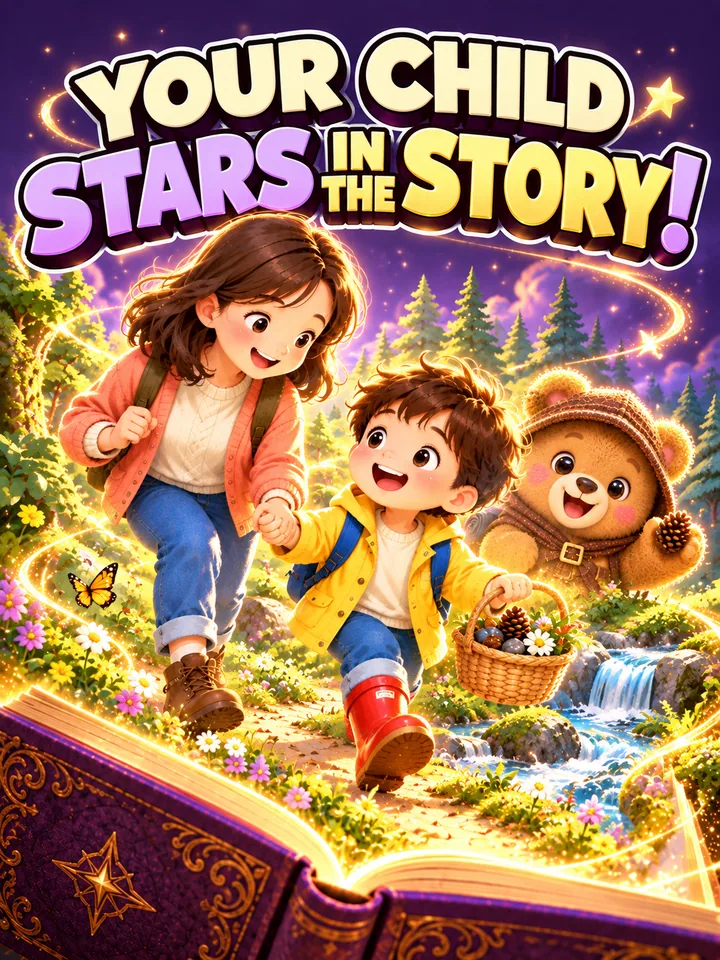
The demonstration is called “Lele and Mama Go Treasure Hunting in the Forest.” A name and family relationship identify the characters, while the treasure hunt gives their actions a shared purpose.
Before creating, answer three questions: who is the main character, who joins them, and what are they trying to do? This is a planning method, not a guarantee that any prompt produces the same outcome.
Compare the original draft, edited draft and finished sentence
The original Chinese opening was “星期天,乐乐和妈妈一起去森林里寻宝。” Before confirming, it was changed to “乐乐穿着红色雨靴,和妈妈去森林寻宝。” Both are retained in the original and confirmed drafts from this same creation.
Only that first sentence changed in the nine-sentence draft. The edit adds a visible clothing detail while retaining Lele, Mama and the forest treasure hunt. The finished opening below matches the confirmed draft, and the video shows the edit and its result.
Check that the result reflects your choices
The finished sentence is: “乐乐穿着红色雨靴,和妈妈去森林寻宝。” Its English version is: “Lele put on his red rain boots and went treasure hunting in the forest with Mama.”
The name, Mama, red rain boots and forest adventure belong to the same result. Check later pages for consistent relationships, actions and illustrations, too.
The complete nine-sentence demonstration story
The following Chinese and English text follows all nine sentences across the three-page demonstration book. The video focuses on editing and hearing the opening; the remaining text comes from that same finished book and is not presented as if the video played every line.
乐乐穿着红色雨靴,和妈妈去森林寻宝。
Lele put on his red rain boots and went treasure hunting in the forest with Mama.
妈妈给乐乐一个小篮子,还告诉他要慢慢走、仔细看。
Mama gave Lele a little basket and told him to walk slowly and look carefully.
乐乐开心地点点头,牵着妈妈的手出发了。
Lele nodded happily, held Mama's hand, and set off.
他们在大树下找到了一片红红的叶子,又捡到一个圆圆的松果。
Under the big tree, they found a red leaf and picked up a round pinecone.
乐乐还发现了一块亮亮的小石头,像一颗小星星。
Lele also found a shiny little stone, like a little star.
妈妈笑着说:“森林里藏着好多宝贝,只要认真观察就能找到。”
Mama smiled and said, "There are many treasures hidden in the forest. You can find them if you look carefully."
回家前,乐乐把宝物分给妈妈看,还说要带回幼儿园和小朋友分享。
Before going home, Lele showed his treasures to Mama and said he wanted to take them to kindergarten to share with his friends.
妈妈摸摸乐乐的头,夸他不仅会寻宝,还懂得分享。
Mama patted Lele's head and praised him for not only being good at treasure hunting but also knowing how to share.
乐乐觉得,和妈妈一起在森林里寻宝,是最快乐的一天。
Lele thought that treasure hunting in the forest with Mama was the happiest day.
Listen to the same book in both languages
The demonstration plays the same sentence from the same book in Chinese and English. Listen to a complete sentence before discussing its meaning with the picture; the two languages do not need a mechanical word-for-word alignment.
Names are used for demonstration. Editorial narration is separate from the book’s actual read-aloud audio, and some waiting is edited out.
Plan your own version
Choose one small situation, review the draft, and only then decide whether to continue.
- Character: use a demonstration name or a name you are authorized to use.
- Relationship: include the family member or companion this story needs.
- Interest: choose a specific activity such as a forest treasure hunt.
- Detail: change one object or action you can check in the result.
Sources, editing and corrections
Prepared and maintained by the Lingo Bear product team. Publisher and operator: Beijing Jianren Jianzhi Technology Co., Ltd.
- Demonstration recorded
- Content checked
This is one creation and reading record for Lele and Mama’s forest treasure hunt. The complete nine-sentence text matches the confirmed draft; only the opening changed from the original draft.
Examples use approved team demonstration material, with demonstration names and synthetic voices. They do not use private learning records or real-child testimonials.
Recorded inputs, model wording and book text retain their original meaning. Practice prompts, language analysis and reading questions are identified as editorial additions.
Prices and availability are checked as of the stated date. Report a page error using the link below; confirmed errors are corrected in the text, with the review date and a note for substantive changes.
Include the page link, passage and suggested correction. Do not send a child’s name, recordings, private stories or account credentials. Report an error on this page
Questions before you begin
What if the result is not what I wanted?
Review the draft and use the editing workflow currently available. Check the app for the scope and cost of redoing completed assets; do not assume unlimited revisions.
Should I enter every detail about a real child?
Provide only information needed for the story and that you are authorized to use. Read the privacy notice first and avoid unnecessary sensitive information.